
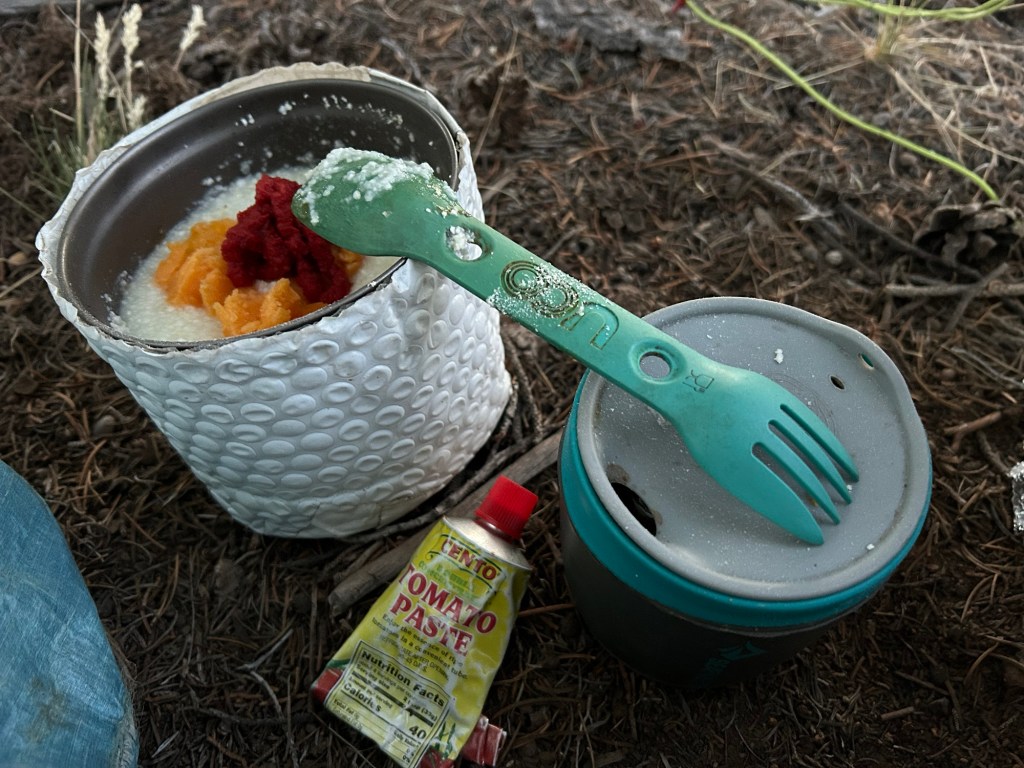
People often want to know what I eat on the trail so I’m going to start with that here.
I’ve gotten pretty good at calculating how much food I need every day. I dehydrate a lot of my food and especially like my dehydrated dinners which include eggplant Parmesan with organic whole wheat pasta, orange ginger turkey and potatoes, and just about anything else you can think of. I use 5 1/2 to 6 1/2 ounces of a dried meal for each night’s dinner, plus one teabag and sometimes some powdered milk. For lunch I’ll have some carbohydrate, such as crackers, popcorn, sesame sticks, or pretzels, along with a protein, which might be one foil pack of tuna with some added mayonnaise and pickle relish, some sort of nut butter or cheese. In order to save weight I’ll be using dehydrated, powdered peanut butter. It’s not quite as good as the real thing but out there it’ll suffice. I usually have cookies or other snacks to go with it.

For breakfast I used to eat rehydrated yogurt and granola, but I’ve gotten to where I don’t want to eat granola again for a while. Sometimes I opt for a hot breakfast of either instant oatmeal or four packages of instant cream of wheat or grits with 2 to 3 ounces of cheese and some squeeze tomato paste. (This latter also makes a good dinner.) I find the oatmeal leaves me hungry within the hour. I want to make my fuel last longer on the PNT so I will forgo hot breakfasts. Another reason for not cooking in the morning will be because of the multitude of bears out there. On some trails, I can be a bit lazy and eat in my tent. But on this trail my food will be hanging at least 100 feet away from my tent. I’ll get up in the morning, pack my sleeping bag and tent, then go get my food which goes on top of everything else in my pack. I’ll grab some protein bars, nuts and dried fruit from the food bag and eat that for breakfast as I walk. When I buy my food in town, I’ll be able to buy bagels and cream cheese or nut butter or even mini pies and cheese for breakfast, but none of those things would hold up well in a box that’s going to sit for six weeks waiting for me to arrive. So for the boxes, protein bars will have to do. I am pretty tired of eating most of the protein bars out there, but I’ve tried to pick some that are more palatable than others. I imagine by the end of the Pacific Northwest Trail I won’t want to look at another power bar for a long time.
In the mornings, I also have a pint of protein drink. I might mix that up the night before and put that bottle in the food bag. I used to sometimes sleep with the bottle of water that I was going to mix into the protein drink so that in the morning it would be at least body temperature and not really cold on a freezing morning. But it is not a great idea in grizzly or any bear area to sleep with a bottle that I use to mix my protein drink in as it will have a food smell.
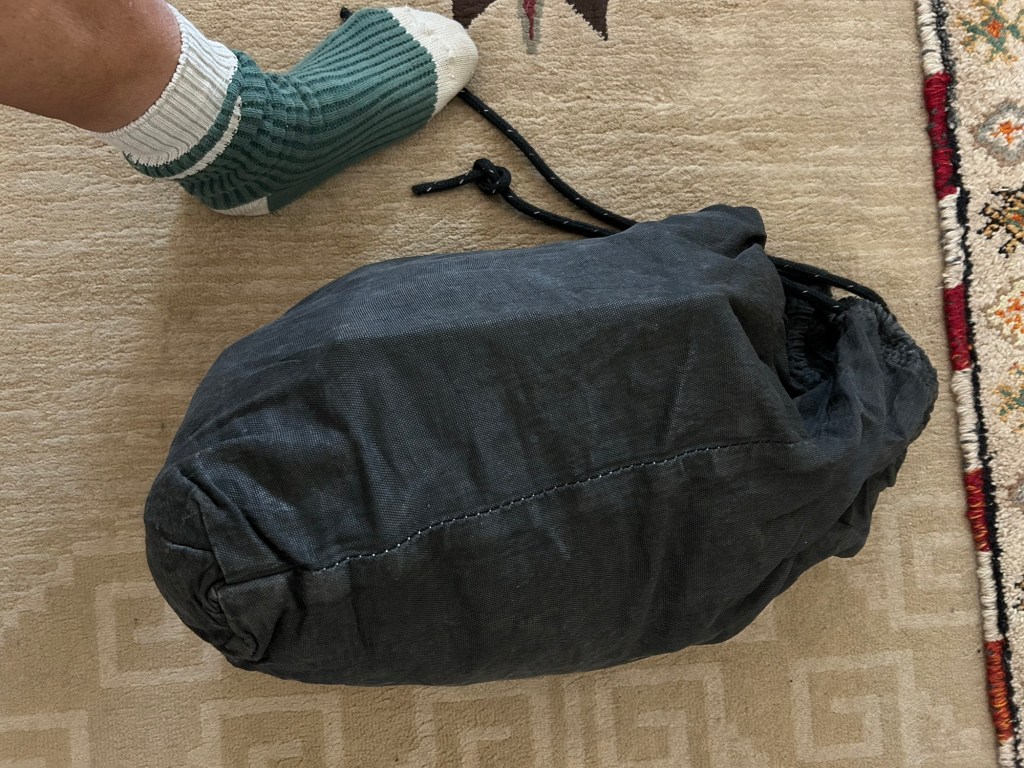
Before I pack my food into the pack on trail, I’ll take what snacks I will eat for the day and put them into the integrated hip belt on my pack. These snacks usually include yet another power bar, a Natures Bakery two-pack of fig bars in various fruit flavors, and a package of some sort of gummies such as Annie’s bunnies. I also usually use at least two electrolyte drinks each day. Sometimes I add some fruit and dried nuts or some jerky.
When I am packing my boxes, I take certain items like the protein drink or powdered peanut butter and put the appropriate amount into separate plastic bags before adding them to the boxes. When all the food is in the boxes, I weigh them. I try to keep the food weight below 2 pounds per day. If there is a box I’ll receive where there’s not a store to get snacks, I’ll include items that I can eat on the spot.
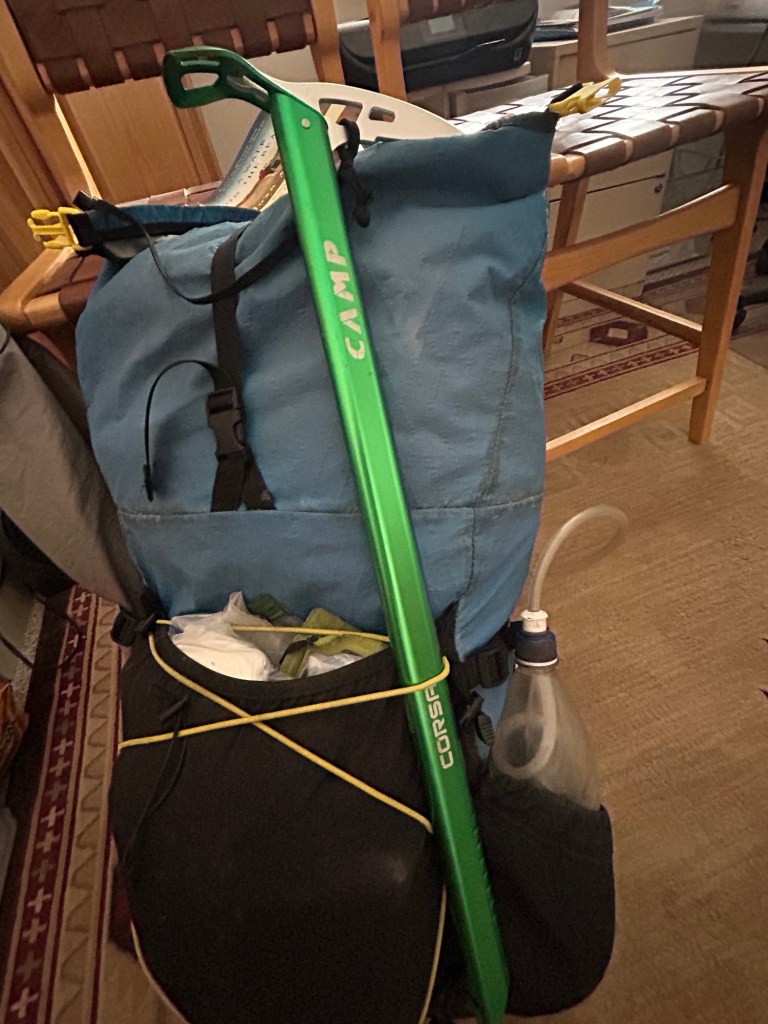
Another big part of planning is getting the gear together. You would think I had that all set, but this was not the case for the PNT. For starters, this trail will most likely require an ice axe and spikes for part of it, as well as warmer clothes, bear spray, and a bear proof food bag called an Ursack. I had taken these things with me when I left Vermont in March so for those items it was just a matter of pulling them out of my stash of gear. But in addition to those things, some of my gear was really show signs of wear. I needed new boots and socks. I had barely eked out the Arizona Trail with my tent, needing to put my umbrella up inside the tent in a big rain. There was no way it was going to keep me dry on the much rainier PNT. My pad was beginning to deflate at night and my raincoat, which also serves as a wind and warmth layer, was from the 1990s. It had served me well, but was ready to be replaced.
Choosing a rain jacket was another matter. The gear has changed so much since I last bought the one I have. This purchase required some research and looking at reviews. I finally chose one that weighs just over 8 ounces. My old one weighs close to 14 ounces and I am thrilled with the weight savings. I could have gotten one weighing under 6 ounces but I would have been trading those few ounces for longevity. I’d like this new jacket to last at least for the last two of the scenic trails I’ll have left after the PNT, which would mean another 6200 miles plus the 1250 miles on this hike. The lighter jacket was only reported to last for one thru hike. That’s a common problem with a lot of the lighter weight gear. The equipment I used in the 1980s lasted much longer, but was so much heavier. And in general, the super light gear is pretty expensive even by today’s standards. I take all these things into account when I choose new gear.

I was extremely blessed in that trail angel Debbie, who I had met when I hiked the Continental Divide Trail, offered to buy this new gear for me in honor of her aunt, Doris June. I will be writing more about Doris June in a later blog so that’s all I’ll say about her for now.
Debbie’s generosity left me searching for which gear to replace my worn out gear with and where to purchase it from. In the end, I chose the same tent and pad I had been using and liked. I stuck with REI for whatever I could get from them. I’ve been a member of the REI co-op since the 1970s and they have always treated me well when I’ve had gear issues on the trail.
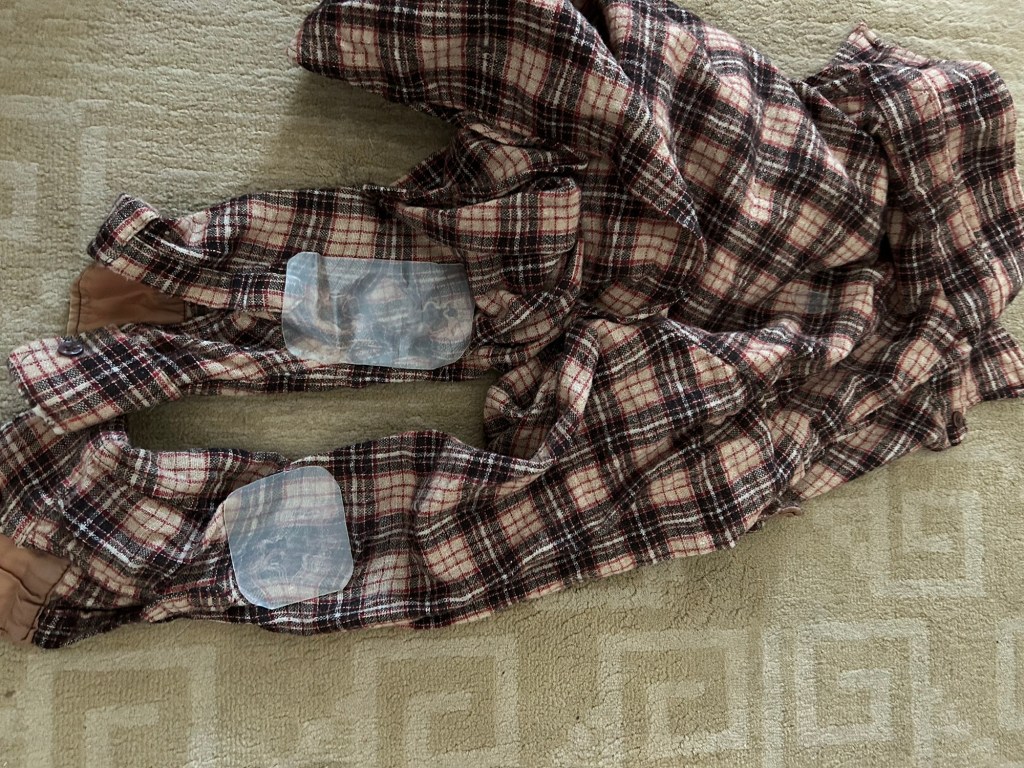
Some of my gear was repairable. I took my old wool shirt that I carry as a warmth layer and patched the sleeves with tape. I made a new pot cozy for my pot. I make this out of foil sided bubble wrap and duct tape. After I boil water at night, I slide my pot into the cozy. It keeps what’s in the pot warm for at least half an hour, allowing me to save fuel by not having to cook the food. All I do is bring the water to just under boiling before turning off the stove, putting the pot in the cozy, adding the food, and putting the lid on to let it soak while I do some of my nighttime chores. In 15 minutes I have a lovely, still hot meal.
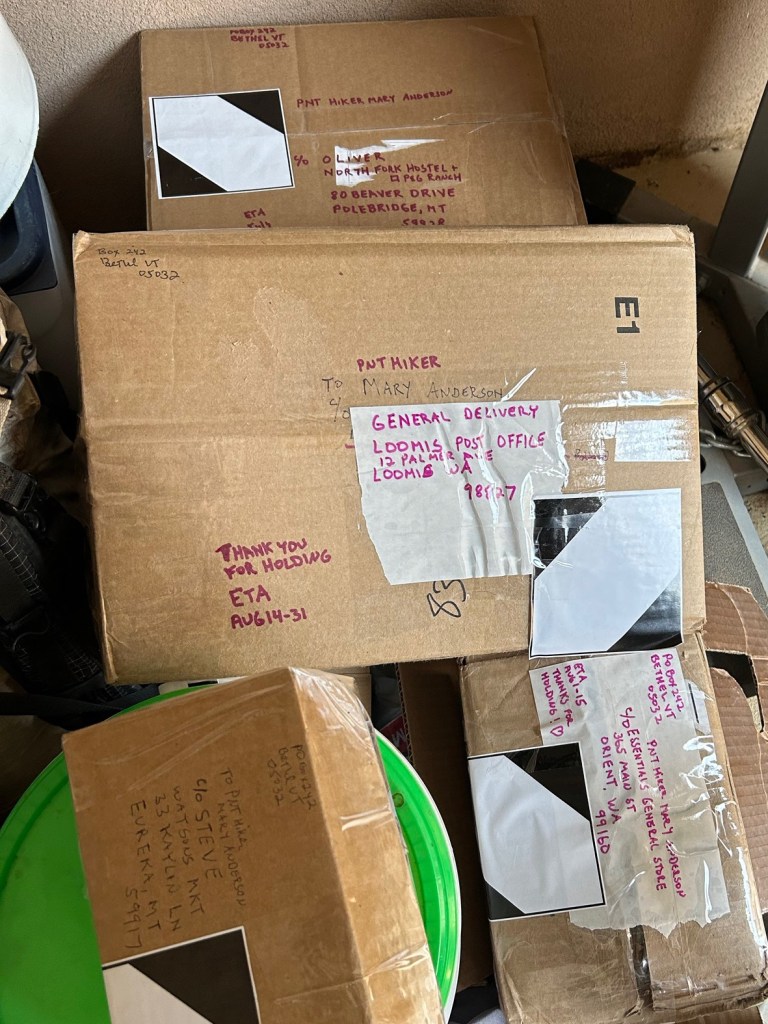
Finally, I reached the point where I could actually pack the boxes. That part went pretty quickly as I only had to grab the number of days worth of dinners, lunches and breakfasts from the various buckets of food I had taken with me when I left Vermont. I then added maps to some of the boxes so I wouldn’t have to carry the whole set with me from the beginning. I also added toilet paper, bug repellent, sunscreen and toothpaste into some of the boxes. After waiting a day or two to make sure I couldn’t think of anything else, I finally sealed up the boxes and addressed them. I’ll put them in the car with me when I drive north so I can save a bit on postage by mailing them closer to the source.
Then I had to take care of some housekeeping things such as paying bills for my electricity and post office box. In addition, a glitch developed for me on WordPress and I was no longer able to post blogs. Luckily, I have a son who is very technologically astute, as many young people are, and he was willing to spend a few hours with me on the phone helping me make things work.
I realized as I was writing this blog that I’m a bit less reflective here than I am when I write on the trail. It leaves me wondering if in my non-hiking life I get so busy I don’t take time to be reflective. I want to pay attention to that. While I have been in Santa Fe, I have been trying to balance all the time I’ve needed to spend staring at the computer with going for walks and preparing healthy meals for myself. It’s not something I always have an easy time with but I’m getting better at it. And now I want to make sure to include some time to check in with all the parts of myself, making sure that I don’t get out of balance in my life. I’m sure it’ll be a lifelong process. In someways this balance is easier for me on the trail because if I push too hard or don’t eat well, my body falls apart and I can’t hike. If I’m lazy, I don’t get to my next food drop. Inner reflection comes naturally for me on the trail in part because it occupies my brain while I walk, in part because I think nature brings that out in me, and in part because thinking about the blogs leaves me feeling connected to all of you who read them. One challenge for me will be to take the lessons the trail almost imposes and bring them into my non-hiking life.
That’s all for now. It might be a few extra days before another blog is posted. I’ll be on the road for a while visiting friends as I wend my way up towards Glacier. In addition on the 19th of June I will be stopping at the studio for backpacker radio. They have asked to interview me and will post a podcast of the interview. I’ll let you know how to find it or when it will be posted. Until then, I wish you all some happy times outside in nature.


 The Mary Badass
Leave a reply to Karen Deets Stained Glass Cancel reply