
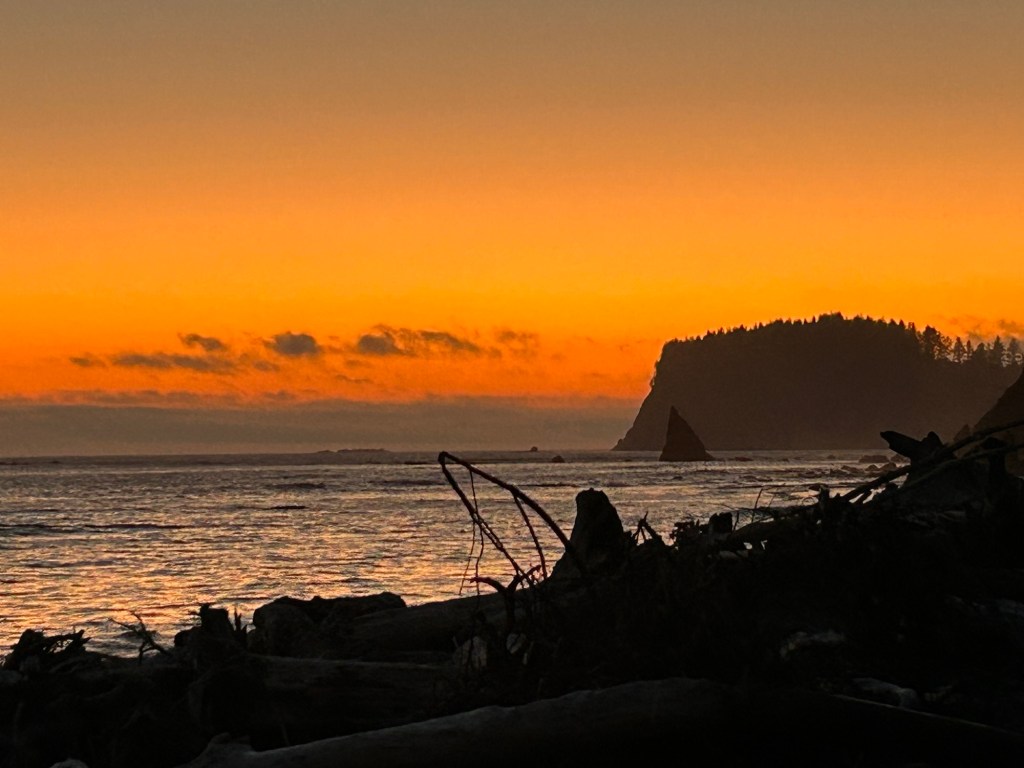
After leaving the kindness of Kindabird (Rosie) and SOS (Steven), I felt refreshed and ready for my final stretch on the Pacific Northwest Trail. I had what I assumed would be a four but possibly five day walk up the coast to Cape Alava, where the trail officially ends. This is the western-most point in the continental United States.
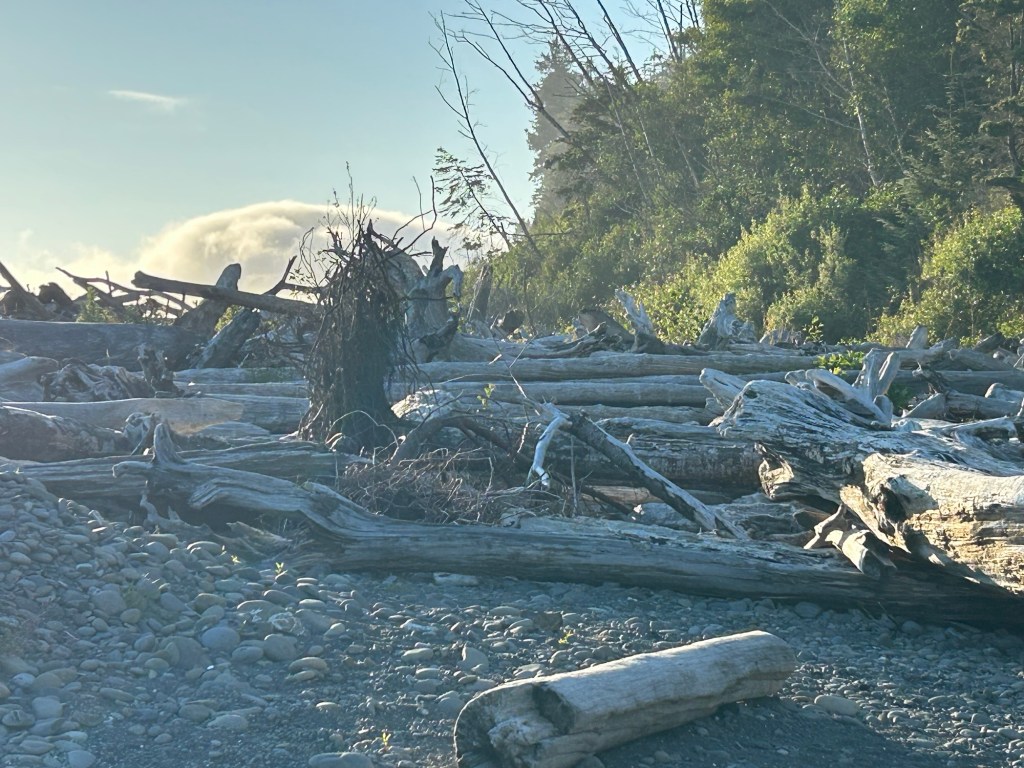
There was a full moon and the tides were mostly in my favor, with negative low tides occurring after sunrise, but still early in the morning. This was important for me because in many places along the coast, if the tide is not low enough, it is too dangerous to try to get around the headland. The sea comes in and smacks against the headlands with enough force to sweep me off my feet and wash me out to sea. In addition, the ocean here often carries huge dead trees and rocks. I was in awe of how loud the sound of rocks rolling in the waves was. And I didn’t need the caution given by the trail app to know it could be lethal to be hit by one of those trees carried in on the rising tide.
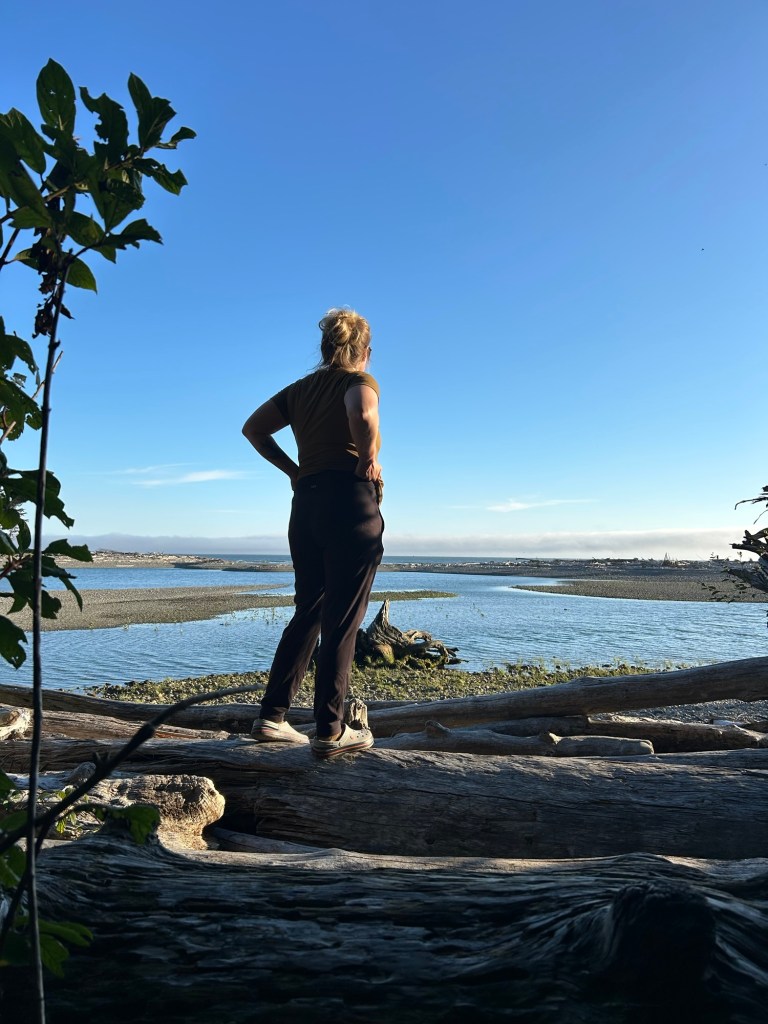
Kelly walked in a short way with me. It was nearing nightfall and she had not put on her hiking shoes so she turned around when we reached the mouth of the Hoh River. I climbed up and over a huge pile of driftwood before hitting a sandy beach. I knew I couldn’t get around upcoming Diamond Rock that evening and was relieved when I saw two tents set up on the beach just past the driftwood. I was pretty sure it was above the high watermark and having those other tents there increased my sense of safety.
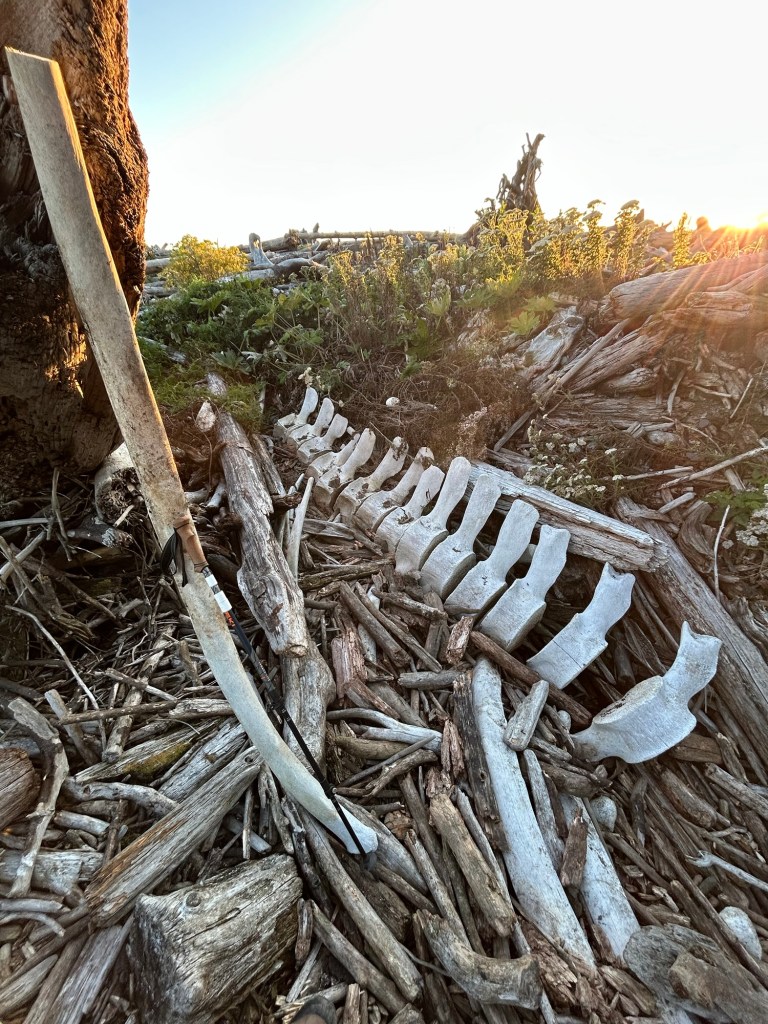
One of the people walked over and told me about some whale bones that were in the driftwood just behind where I was camped. I walked over to them and was awed by the size of just one vertebrae from these enormous creatures bodies.
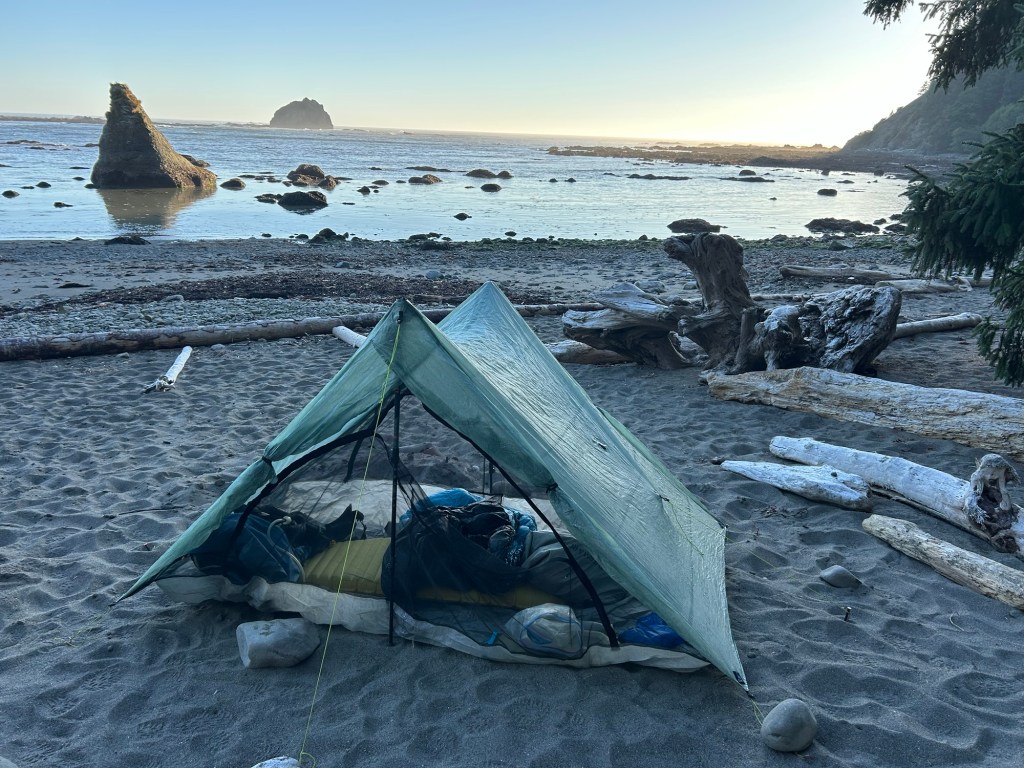
I woke up early in a dampness that would become the norm for me along the coast. My tent is what’s called a single wall tent, which means it’s constructed of just one layer of waterproof material. It makes the tent much lighter than a double wall tent, which allows moisture to escape from the inside of the tent’s non-waterproof fabric and collect on the underside of the waterproof rain fly. I suspect that even a double wall tent would’ve been damp in the sea air, but it’s often more so in a single wall tent, especially in damp conditions. I spent a little time drying off what I could from in and outside my tent, using the microfiber rag I carry for this purpose, then set out on my days trek.
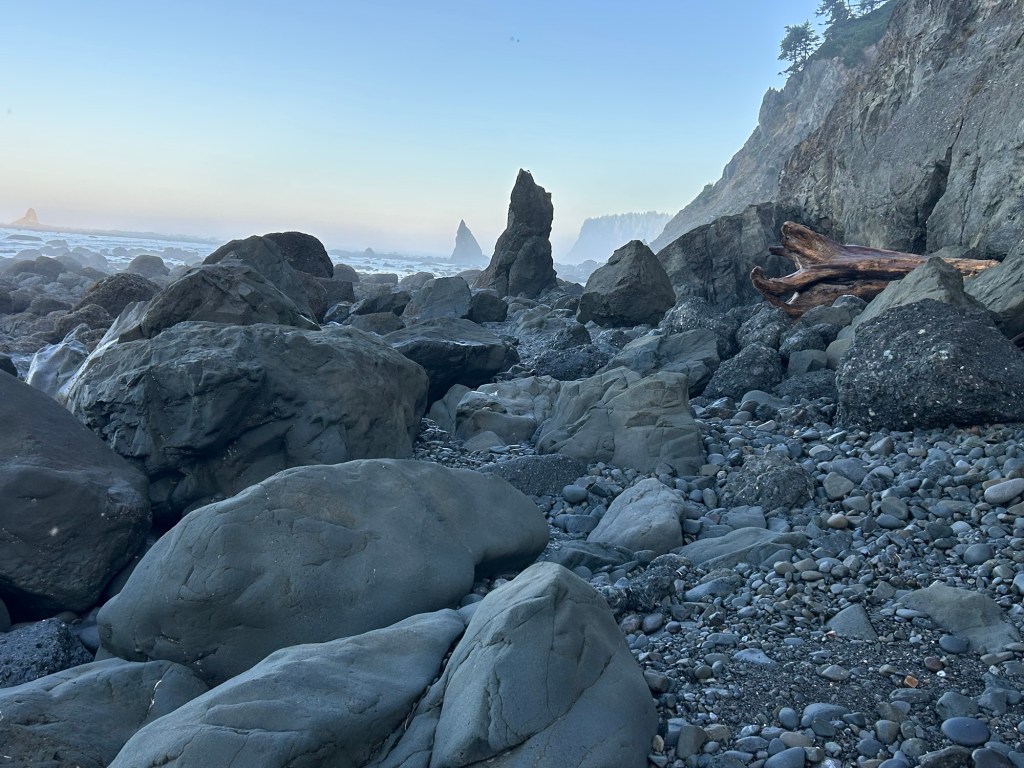
I had a headland to get around when the tides were no more than 2 feet high. It was close to where I was so I wasn’t concerned about making it, but I still made sure to get an early start. The tide was a few hours from being at full low when I set out.
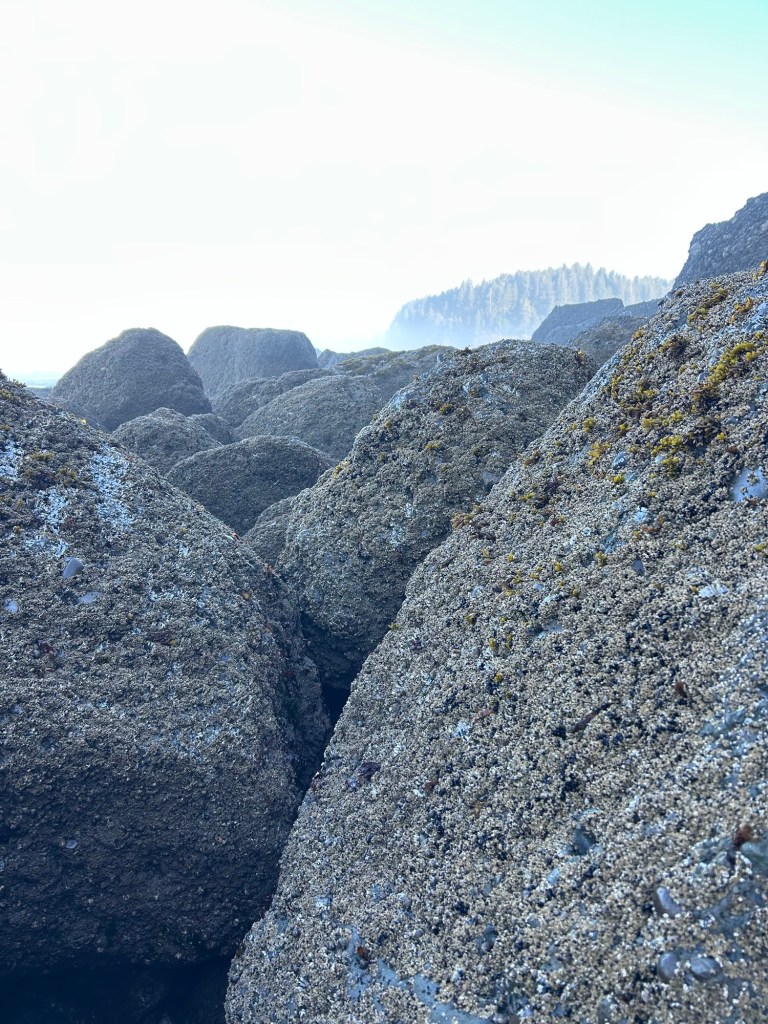
I was surprised when I got there to see how slow and tedious it was to make my way around this two mile section of trail. I had to navigate up and over huge, barnacle covered rocks. I was glad I had a pair of gloves with me as I pulled myself over the sharp barnacles.
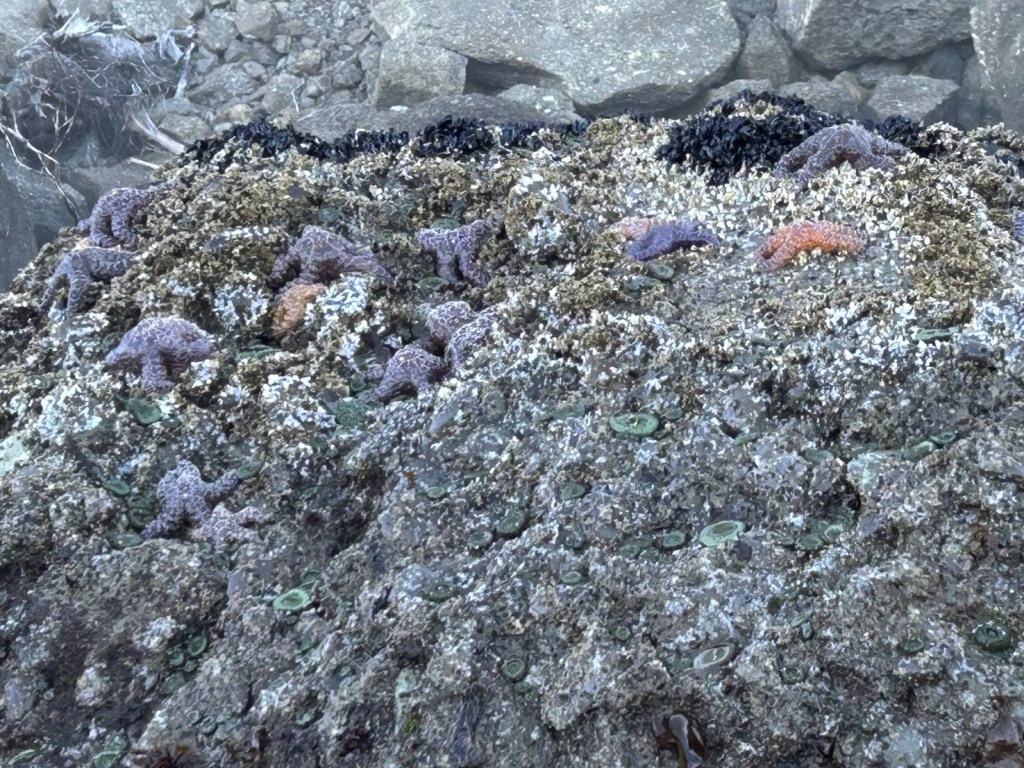
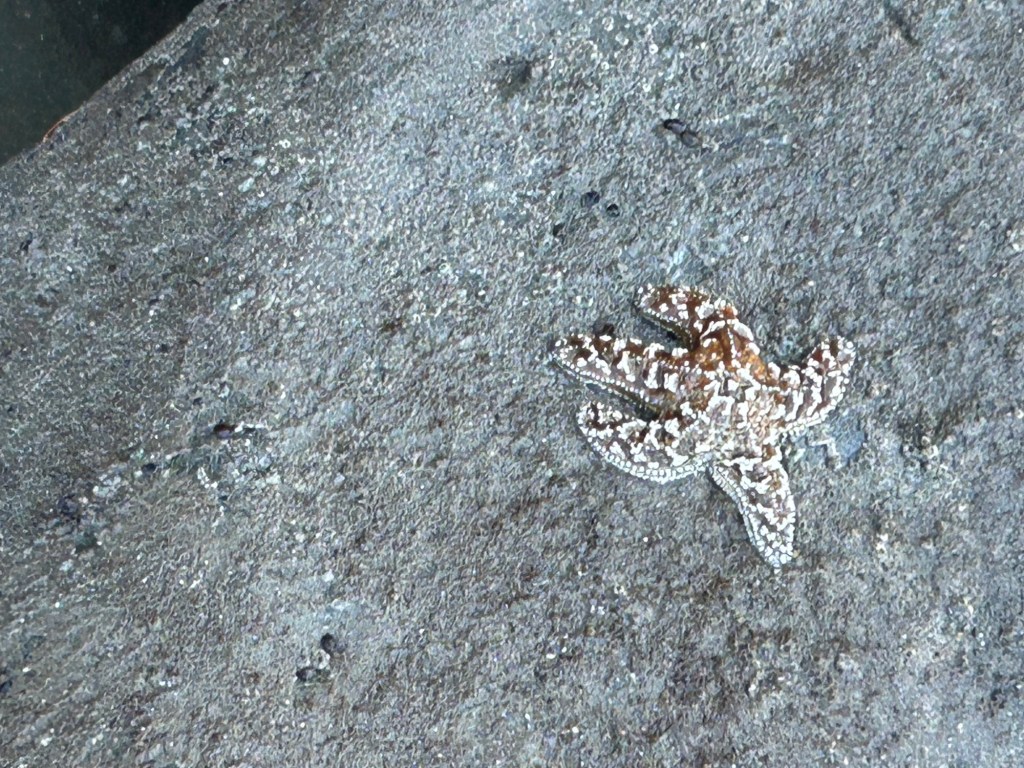
I wondered how much of the coast was going to be like this. I reminded myself not to worry about the future and to focus on what was in front of me. By doing this I was able to fully enjoy the myriad of creatures in the tide pools. I was especially enamored with the many starfish and colorful anemones. I hated it when I had to step on a rock and crush something. Sometimes the anemones closed up when I touched them and sometimes they squirted water at me.
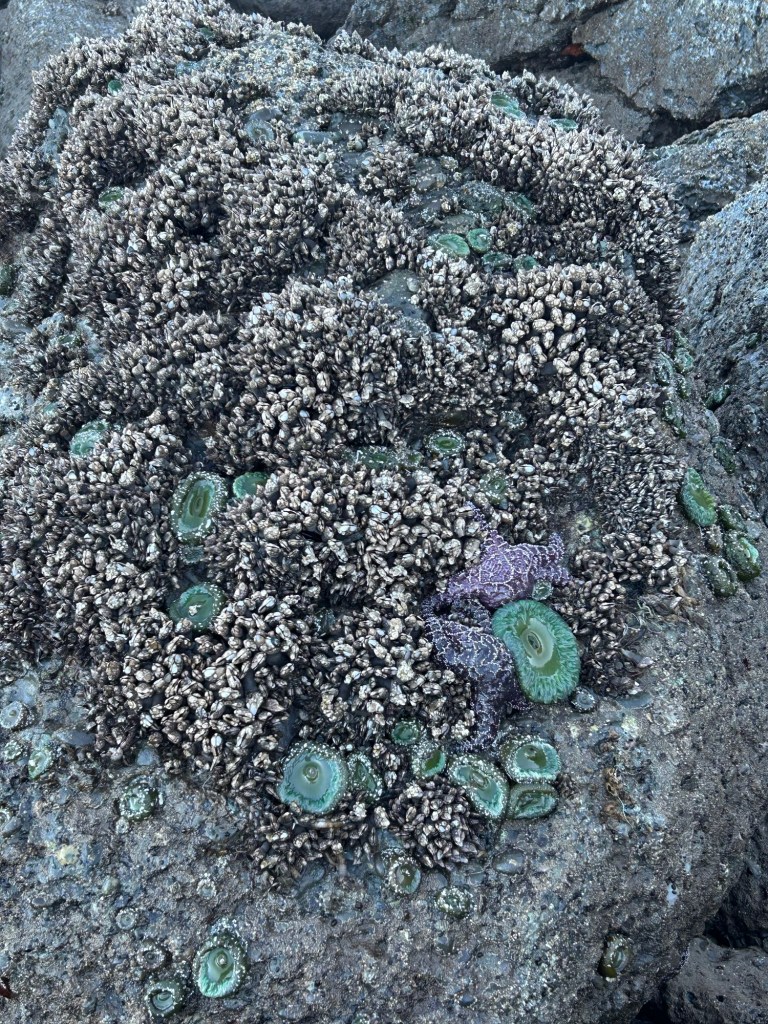
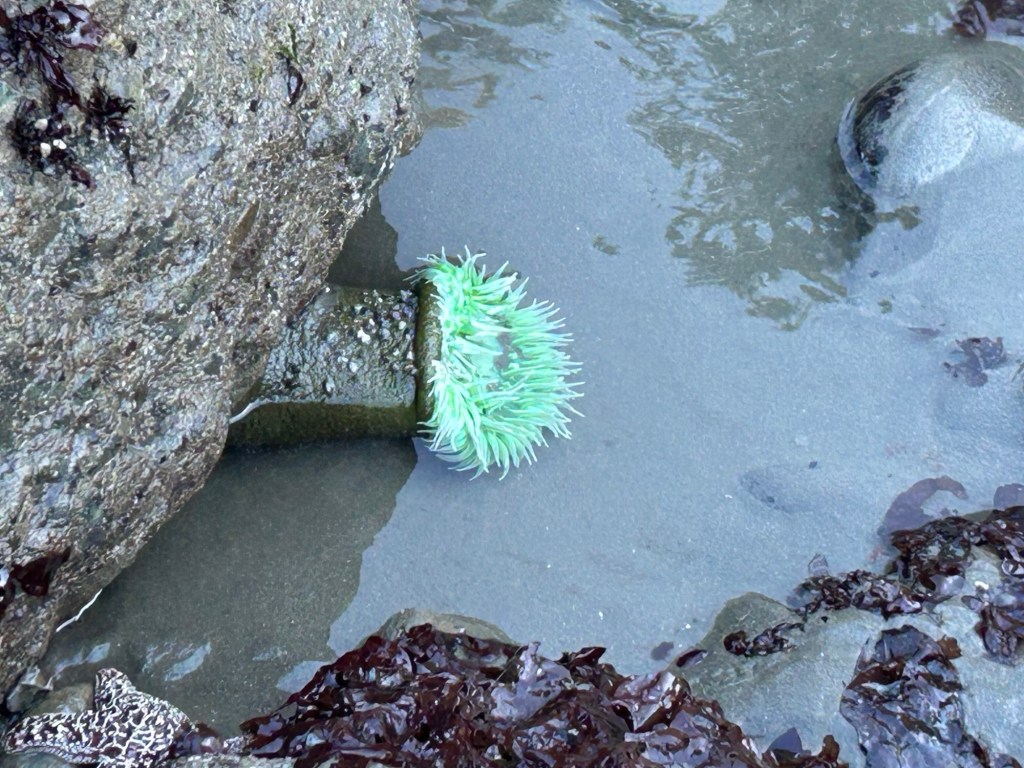
I was relieved when I reached some firm sand, although ironically, soon after I reached this easier walking, I tripped and twisted my knee a bit. I was glad I hadn’t fallen on the rocks, but realized I had to pay attention no matter where I was walking.

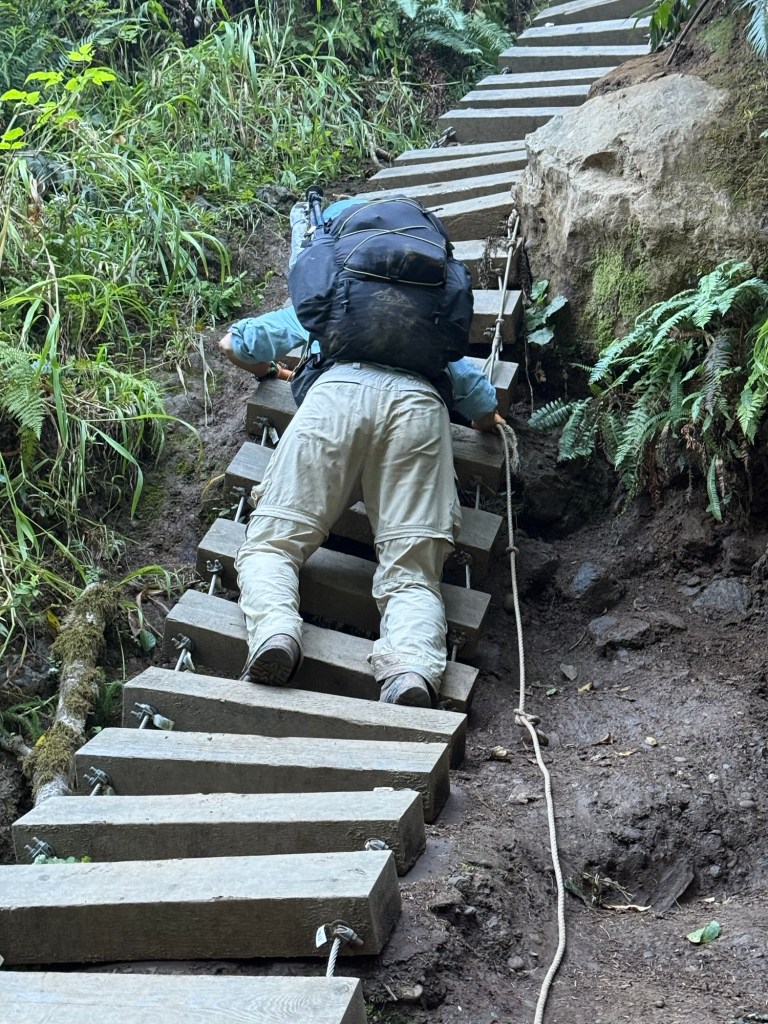
My relief at being out of the boulders was short-lived. I soon met the first of what would be numerous rope or ladder assisted climbs. These were on sections of beach which had to be avoided because the headland could not be navigated safely at any tide level. What the trail did to get around these steep headlands was go straight up the cliff using either a rope or series of ladders.
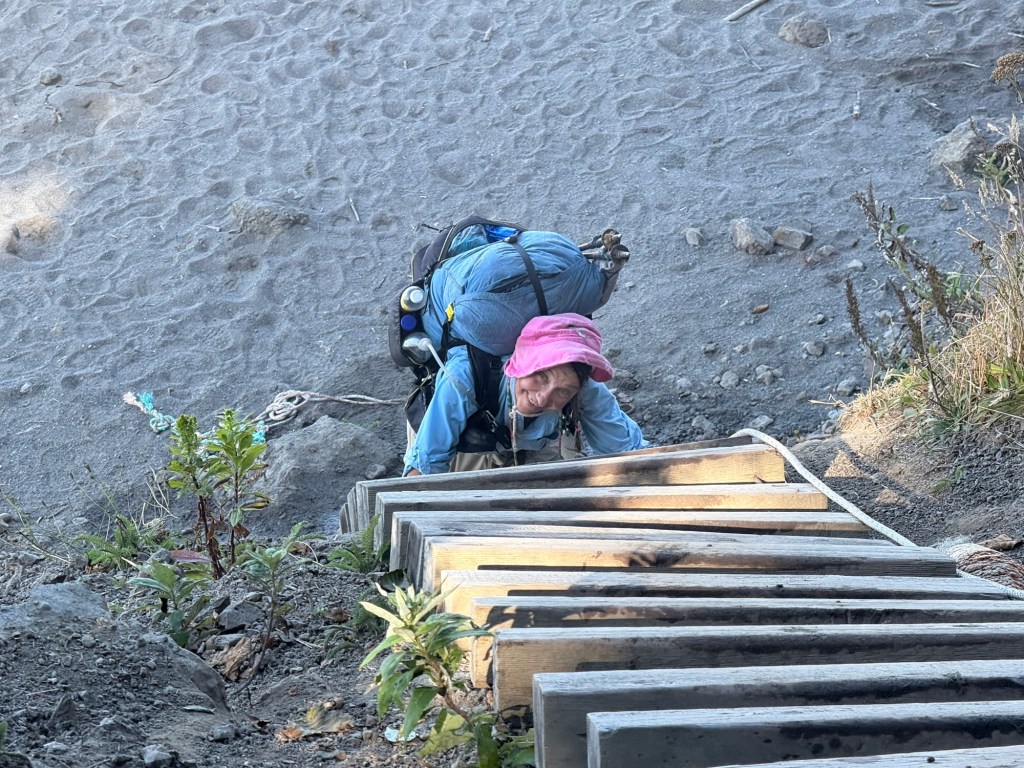
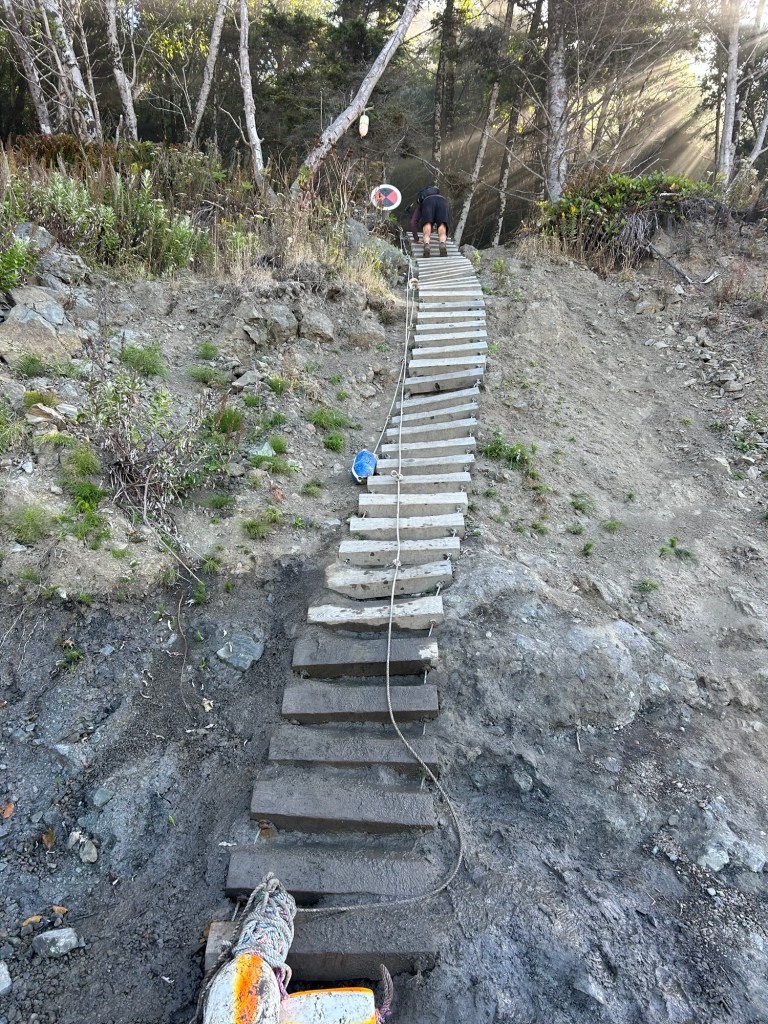
The uphill ones were physically demanding, and while scary for me, I found the downhill ones to be scarier. Sometimes there would be a rope or a ladder that would end mid way. There was often a gap of maybe 5 feet between the end of one rope and the beginning of the next one. I did not like navigating those short, steep, unassisted sections with nothing to hold onto.
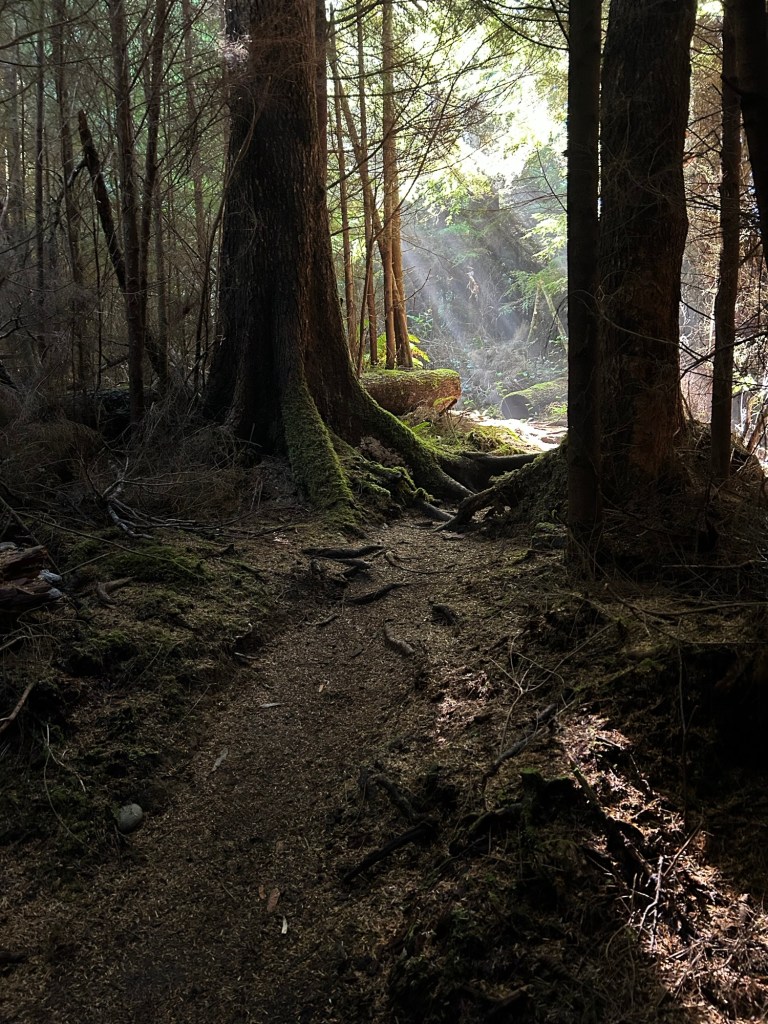
Once on top, I was no longer as scared, even though there were sometimes steep rope-assisted sections along the ridges. They were less exposed than the sections going up or down to the beach. Still, it was tiring and slow going. I was glad I only planned for about 10 mile days.
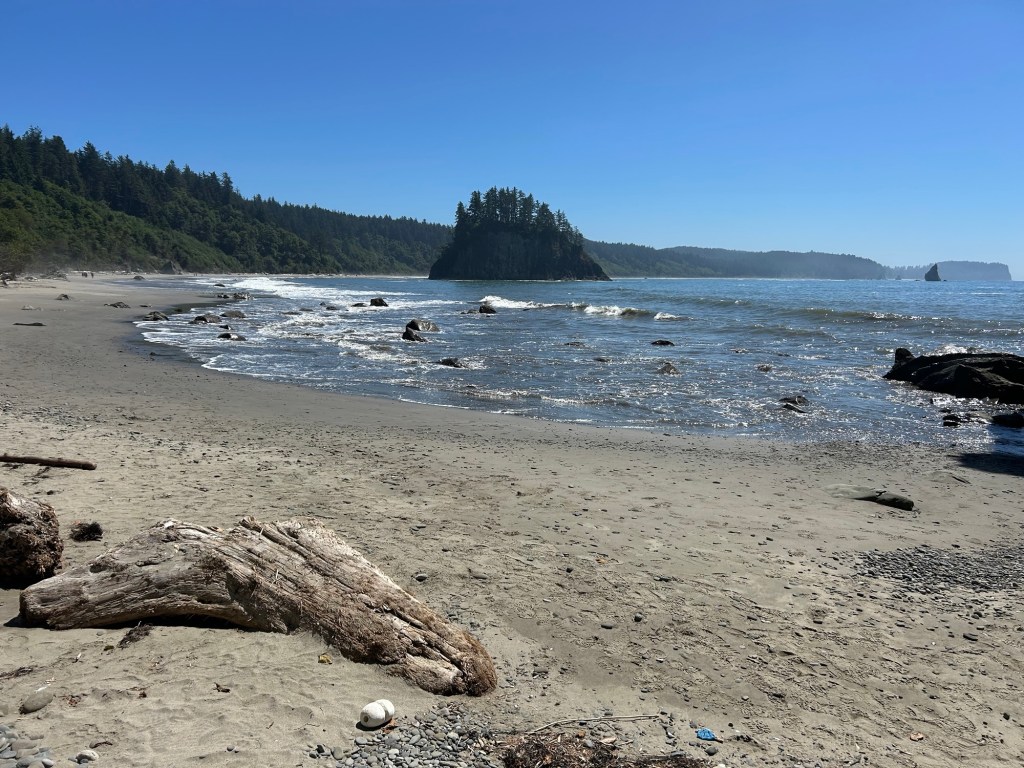
There were some sections of lovely sand walking, and even though I was tired I made it past where I originally was going to stop that second night.
When I reached Scotts Bluff Camp I pitched my tent above the high tide line on the sand and fell asleep with the waves roaring outside my tent.
The following day was more of the same, with numerous ups and downs the headlands including one that had a series of ladders with a few hundred rungs.
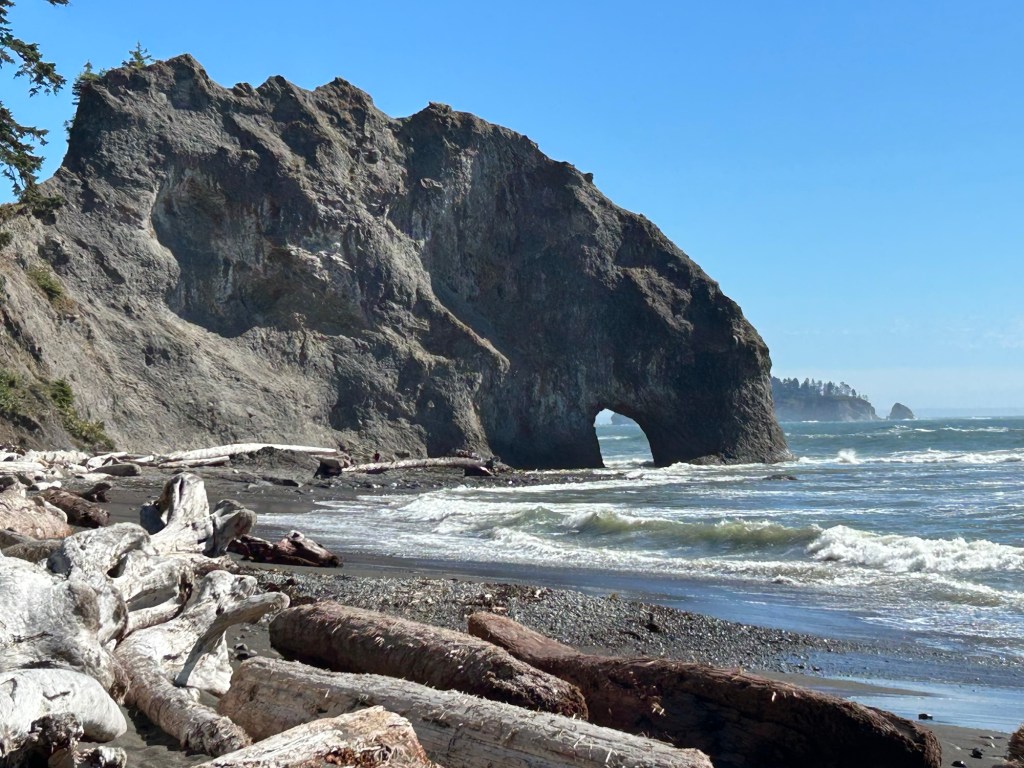
I made my way around the unfordable Quillayute River, crossing from what is called the southern coast to the northern coast. In the parking lot near Rialto Beach I was treated to a lovely lunch from a man named John who’s been living in his RV for around five years. Because it was later in the day when I left the comfort of John’s RV, I had to sit on the beach for two hours while the tide retreated so I could make it to the Chilean Memorial where I was to camp for the night. This is where a series of intense experiences began. Stay tuned for another blog to read about them.
#thruhike #thruhiker #thruhiking #nationalscenictrails #nationalscenictrail #kindness #pnt #pacificnorthwesttrail #themarybadass

 The Mary Badass
Leave a comment