
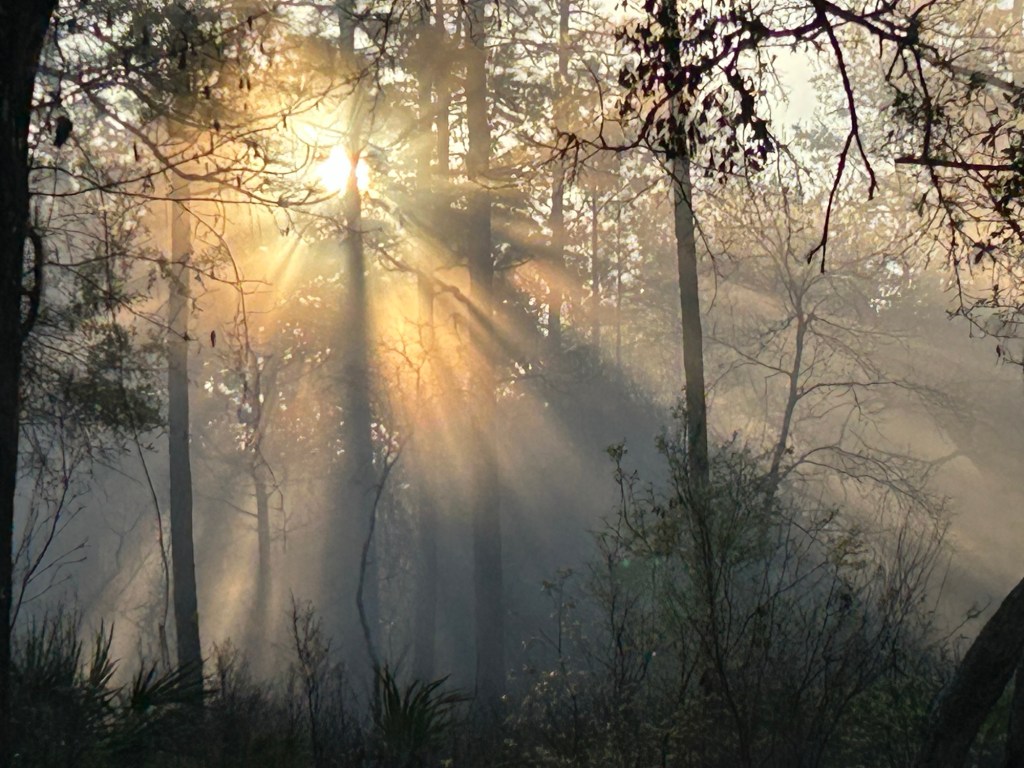
Thinking about gift economies got me remembering how I struggled with feelings of scarcity for much of my life. Years ago I learned these feelings came from childhood experiences, and I worked to repair them. Unfortunately, they came flooding back with a vengeance when my husband walked out leaving seven dollars in our bank account. But over these last almost five years of adventuring, I’ve been reminded of how little I actually need to get by. And all of the wonderful Trail Angel’s have reinforced for me the belief that as long as I keep putting one foot in front of the other and try to do my best, I’ll be satisfied. I may not always have exactly what I would like, but I will have enough. And if I’m doing my best in every given moment, then no matter how it ends up, I can be satisfied.


On the trail, I’ve learned that Nature gives her gifts freely to all without discrimination. I might see a bear on a trail. Iceman might see two cottonmouth snakes, twined and doing what looks like a gorgeous dance. Someone else spots a panther. No one of us will see every possible thing and the trick is to be satisfied with the gifts we are given rather than envious of what other people get.
As long as they don’t get destroyed by human greed, we all have the benefits of beautiful forests, deserts, mountain top views and wildflowers when they’re in bloom. We are blessed that people before us saw fit to preserve some of the Earth’s beautiful places and I hope we are strong enough to insist they remain that way for years to come.

Some of the areas I walk through are incredibly rich in vegetation and diversity. Others I go through look devastated either from fire, hurricane or logging. But I know that even the devastated areas, as long as they are not contaminated by human-made chemicals, are rich in potential. New seeds will soon sprout and a future forest will replace a storm or fire ravaged area.

Some areas are more monoculture than others. Sometimes I find this beautiful such as in an area known as the Cathedral of the Palms. On the other hand, I find man-made monocultures less appealing. It was tedious to walk along straight canals in exposed sun or through planted pine forests for miles and miles. Of course this got me thinking about the importance of diversity in all of our lives.

On the Continental Divide Trail and the Arizona Trail I hiked in areas where water was incredibly scarce. On the other hand, on one of my Appalachian Trail thru hikes I had rain for 40 days straight. And even though quality drinking water is sometimes difficult to find on the Florida Trail, there has been no scarcity of water to walk through.
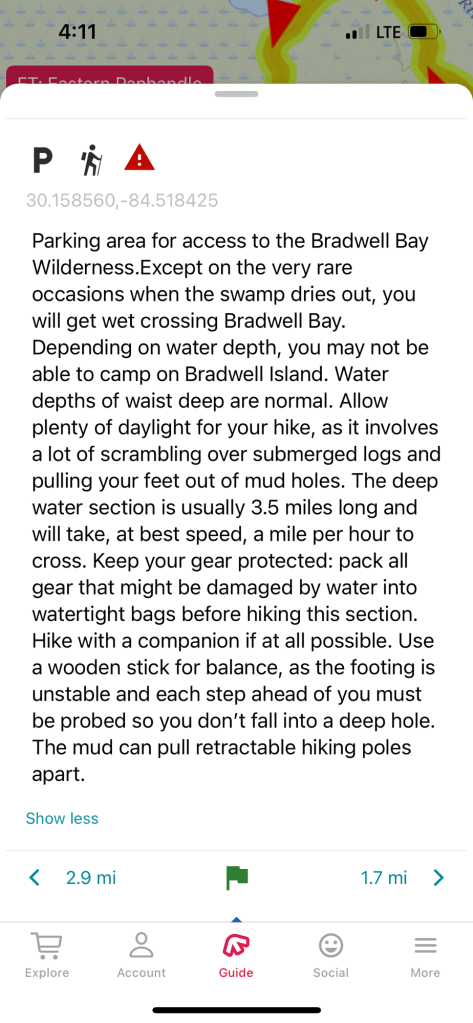
The Trail app I use describes the southern end of the Florida Trail to be some of the hardest hiking in the country because you walk in swamp for many miles. The reality for me has been that that was not the hardest section of swamp. In general, water levels have been low this year. But a few large rain storms have increased water levels in some places along the trail. And I was about to hit those areas just after a 5 inch rain storm.
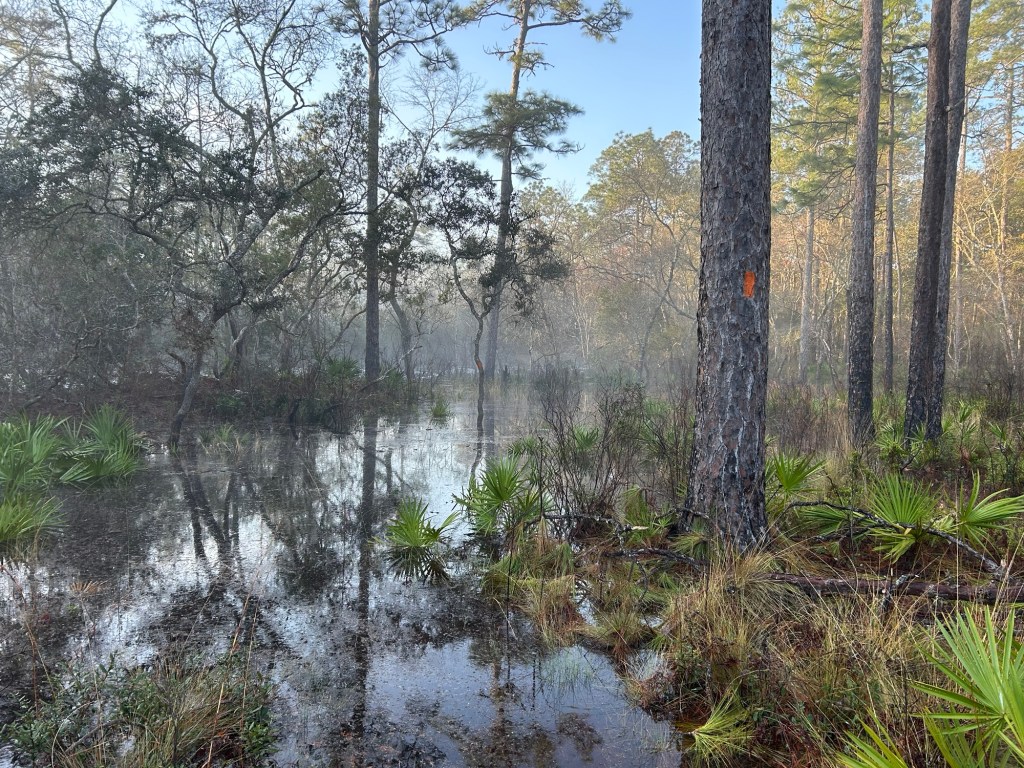
Much of the Florida Trail from Saint Mark’s north was either in swamp or on roads. There was a definite scarcity of dry trail walking. For a number of days I was able to wade through the wet areas and keep my spirits up by telling myself I was doing my broken foot a favor by continually soaking it. But I knew I had to give some serious thought into how I would walk the Trail when I reached the Sopchoppy River. What was usually beautiful trail meandering along the riverbank was now indistinguishable from the river which had overflowed its banks. I took a few steps into the water and was already in over my knees. The water was cold and I could feel the current tugging at me. It didn’t take me long to decide that this was not the way I would walk. Even though that part of the trail was supposed to be beautiful, I looked at my map and found a way to walk more safely around the overflowing river. I chose a series of forest service roads which rejoined the trail further on. This did not mean I escaped with dry feet as I still had plenty of swamp to walk through. It just meant I didn’t have to go through any areas which felt sketchy to me.
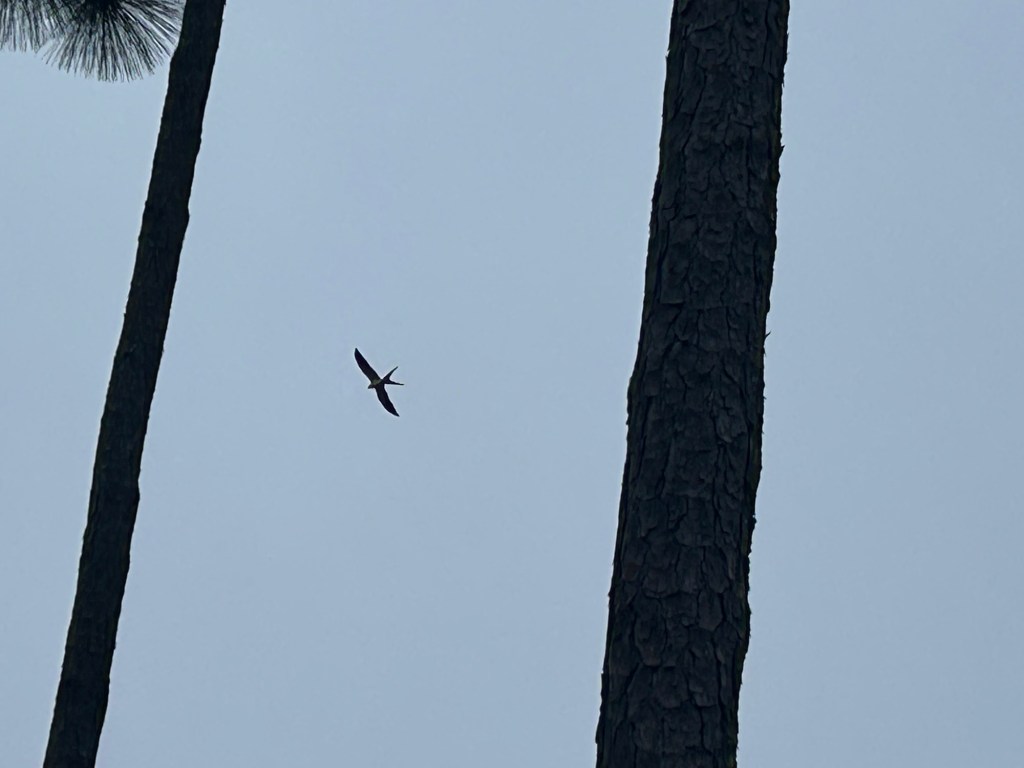
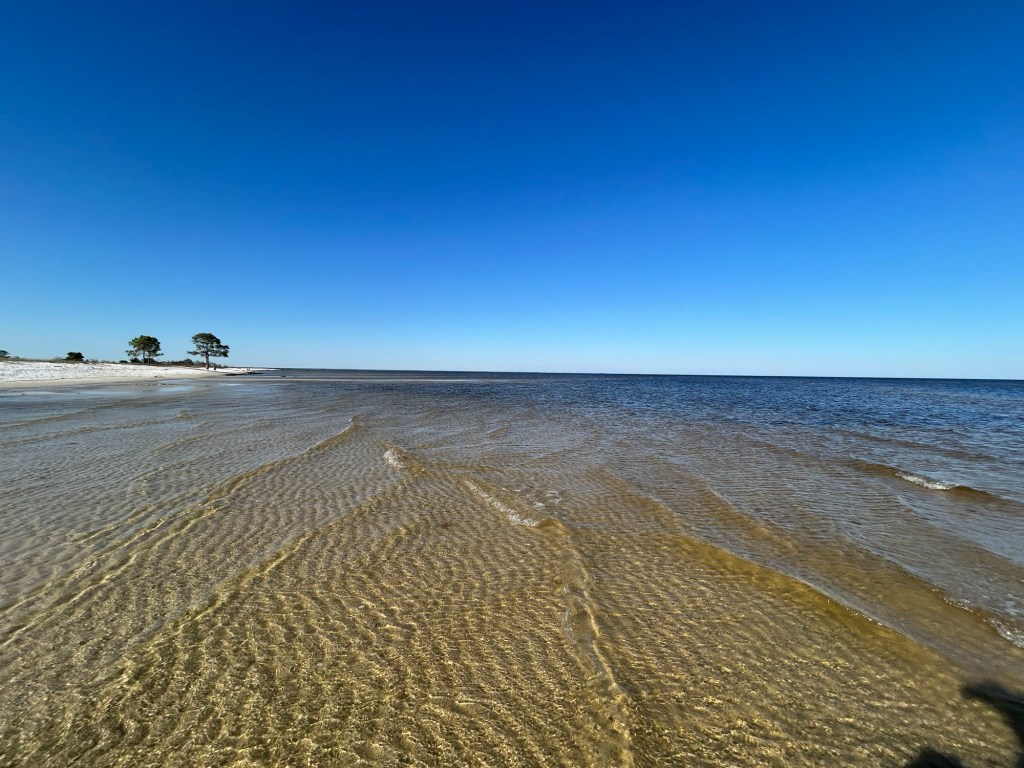
I did the same thing on the following few days when I was in areas with deep water. I spoke with a Ranger who informed me the water would be deep. I also talked with a hiker who had gone in the deepest section of Bradwell Bay the day before I would be there. He told me the water had been up to his armpits. At times he broke through the muddy crust on the bottom and had nothing to push his feet against to get out. Considering that and I was 8 inches shorter than he was I figured the water could be up to my chin. So once again I made the choice to walk a forest service road around the deepest part of the swamp, even though it meant doubling the miles for that section of trail. I was missing an iconic part of the Florida Trail, but I was determined not to think of it as a missed experience. I knew it was not a good idea for me to go through that particular swamp at that time. Rather than bemoaning a lack, I made a point to enjoy walking along a mostly dry forest service road, seeing a rare red-cockaided woodpecker, as well as a bald eagle and swallow-tailed kites. I had my closest encounter with an alligator and saw my first pygmy rattlesnake on those road walks. Walking the road also meant I saved some time so at the end of the day I had the chance to drive to the Gulf of Mexico and take in the views there.
For three days, I had the pleasure of hiking with Trail Angel Liz Sparks, who drove all the way from Tallahassee to shuttle me. She is knowledgeable about the plants on the trail and taught me to recognize what are known as titi swamps (pronounced tie tie). I learned that when I saw a wall of this fragrant flowering bush, just as when I saw a cypress dome, I would soon be walking in water. And for better or worse, there was no scarcity of titi on this part of the Florida trail.

While walking the trail with a broken foot would not have been my first choice, I’ve learned to be satisfied with the experience it has offered me. And I am extremely grateful there has been no scarcity of Trail Angel’s to help me complete my goal of hiking the entire Florida Trail. To all of you I say thank you.
#thruhike #thruhiker #thruhiking #nationalscenictrails #nationalscenictrail #floridatrail #did #ptsd #healingtrauma #kindness #gifteconomies #arizoniatrail #appalachiantrail #continentaldividetrail

 The Mary Badass
Leave a comment